Screenshot the Route: How Tyneside's WhatsApp Pelotons Keep the Wheels Turning
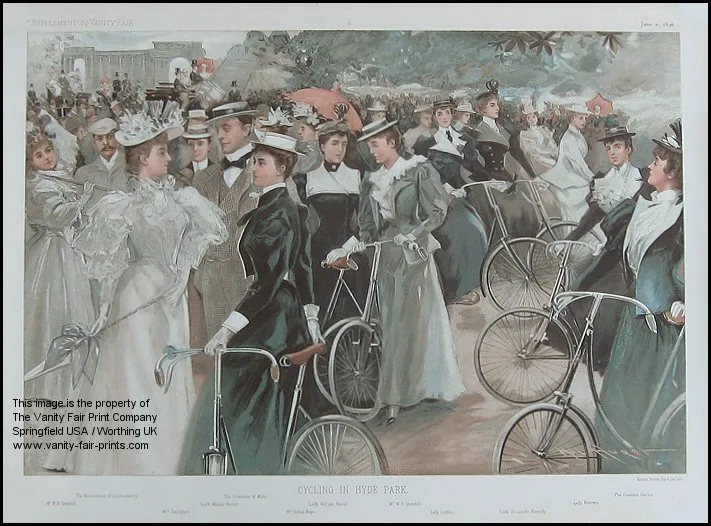
Photo: "Hal Hurst" (1865-1938), Public domain, via Wikimedia Commons
It's 7:12 on a Sunday morning and your phone buzzes. A screenshot of a route map, a pin drop at a lay-by near Wylam, and a message: "Rolling at 8. All paces. Café stop at the bottom of the hill." No committee. No membership form. No annual general meeting scheduled for a wet Tuesday in February. Just a chat, a bike, and a loose agreement to look out for each other.
This is the group chat peloton — Tyneside's unofficial cycling scene in its natural habitat. It lives in WhatsApp, spills onto Instagram, and grows by word of mouth. It has no badge, no subs, and no kit order (unless someone gets enthusiastic and makes a one-off t-shirt). And in 2026, it's arguably the most common way people in Newcastle and beyond find themselves riding in company.
The Chat Is the Club
Official clubs still matter — they run coaching, races, and structured training. But the informal crew is a different beast. It often starts with three or four mates who ride the same loop, then swells when someone posts a photo on Strava and a friend asks to tag along. Before long there's a group of twenty, a name like "Sunday Social Spin" or "Town Moor Loops", and an admin who is part organiser, part diplomat, part weather forecaster.
The admin's job is unpaid and mostly thankless. They drop the route (usually a screenshot from Komoot or RideWithGPS), confirm the meeting point (the lay-by, the park gate, the café on the Quayside), and make the call when the forecast looks grim. They are not a coach. They are not a marshal. They are the person who remembers the map and knows where the toilets are.
The Unwritten Rule: Nobody Gets Left Behind
Ask anyone in these groups what makes them work and you'll hear the same phrase: no-drop. It's not a formal policy, more a shared understanding. The group regroups at junctions. The faster riders loop back. Someone — often the most experienced person there — quietly takes on the role of sweeper, sitting at the back and making sure the last rider isn't riding alone.
The no-drop ethic isn't about being slow. It's about being social. A group ride where half the field disappears over the horizon isn't a group ride; it's a time trial with extra steps. The best crews are explicit about it: "We wait at the top of the hill. We wait at the bridge. We wait at the café. If you're not sure, ask."
When the Group Stretches: Pace Gaps and Practical Fixes
Even with the best intentions, pace gaps happen. A 25-mile spin can quietly become a 40-mile day when the route takes a scenic detour. The informal crews handle this with a few practical tricks. Some split into two groups at a pre-agreed junction — a faster bunch and a social bunch — with a plan to meet at the café stop. Others appoint a "human sat nav" who knows the route and a "mechanic" who carries the spare tube and the multi-tool. The key is communication: a quick message in the chat before the ride, a clear brief at the start, and a regroup point that everyone agrees on.
It's also where the etiquette of not half-wheeling comes in. Riding half a wheel ahead of the person next to you is fine in a race; on a social spin it's a quiet way of saying you'd rather be somewhere else. The best group chats police this gently, with a joke rather than a lecture.
New Here? How to Slot In Without the Faff
If you're thinking of joining a crew, the first step is the easiest: send a message. Ask about pace, distance, and whether the route is road, gravel, or mixed. Be honest about your fitness. No one minds a newcomer who says "I've been riding 15 miles a week, is this too much?" They do mind the person who turns up for a 60-mile hilly ride having never ridden further than the shops.
Bring the basics: a spare tube, tyre levers, a pump, some snacks, and a phone with the route downloaded. Wear what you've got — matching kit is not a requirement, and the person in the faded fleece is probably the most experienced rider there. Introduce yourself at the start. Ask where the café stop is. And if you need to peel off early, say so — the sweeper will appreciate knowing.
Where to Find Your People
The informal scene is easy to find once you know where to look. Strava clubs are a good starting point: search for Newcastle, Tyneside, or specific areas like Heaton, Jesmond, or the Ouseburn. Instagram hashtags such as #NewcastleCycling and #TynesideRides turn up regular ride posts and stories. Local bike shops — the workshop counter in Heaton, the café on the Quayside, the place that fixes your bottom bracket — are gossip hubs for group rides. And word of mouth still does the heavy lifting: ask a colleague, a neighbour, the person locking up next to you at the racks.
None of this is a replacement for official clubs, which remain brilliant for coaching and racing. It's just another option — a lower-commitment, higher-chat way to ride with people.
The Admin Nobody Sees: Weather Calls, Route Debates and the Faff
Behind every smooth Sunday spin is a group chat that has been quietly negotiating for three days. The forecast debate. The route discussion (coast or inland? Wylam or Derwent Walk?). The person who says "in" on Thursday and bails at 7:55 on Sunday morning. The etiquette of the chat is its own unwritten code: don't spam, don't overcommit, and always thank the organiser. A simple "thanks for the route" goes a long way.
And if the weather turns? The informal crew adapts. A planned 50-miler becomes a 20-mile loop with a long café stop. The ride becomes a walk. Or it's cancelled with a message that reads, simply, "Next week." No drama. No refunds. No committee meeting.
The group chat peloton isn't perfect. It can be cliquey, it can be disorganised, and it relies on the goodwill of a few people who do the unseen work. But at its best it's a reminder that cycling doesn't need a membership card to be a community. Sometimes all it needs is a screenshot, a meeting point, and a promise not to leave anyone behind.
So next time your phone buzzes on a Sunday morning, you know what to do. Check the route. Check the pace. And check whether the café stop is before or after the hill.