The Back-Street Bench: How Tyneside's Independent Bike Mechanics Keep Wheels Turning
The first sign is usually a sound. A tick from the cranks that becomes a chirp by the time you reach the traffic lights. Or a rear wheel that feels vague in corners, or a gear that jumps only when you stand up. You can ignore it for a week or two. Then it becomes a wet-weather commute with a soundtrack.
In 2026, plenty of us are trying to keep bikes going for longer. New bike prices are still sobering, the second-hand market is full of almost-right machines, and nobody wants to send a perfectly decent frame to landfill because a bearing is gritty. That is where the North East's independent bike mechanics come in. Some have proper workshops. Some work from garages, units and back rooms. Some turn up in a van with a workstand, a torque wrench and a flask. All of them are part of the reason Tyneside keeps rolling.
The bench behind the shopfront
Not every good mechanic has a shopfront. Some work out of garages in Heaton, units off the Coast Road, a bench in Gateshead, or a mobile setup that covers Newcastle, Gateshead and North Tyneside. You might find them through a club mate, a local Facebook group, a repair café recommendation or the sticker on a friend's top tube.
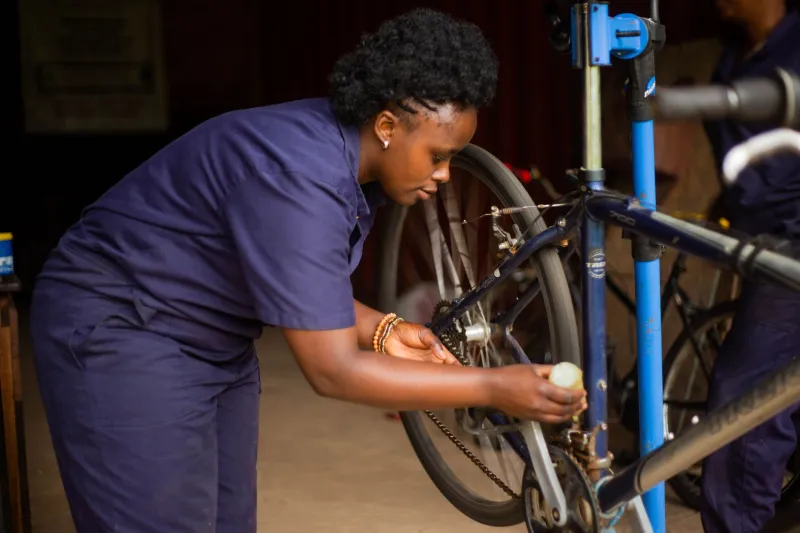
Their work is broad. One morning it is a commuter bike with a slipping chain and a brake that howls. The next it is a club rider's wheels needing a true and a tension check, a family cargo bike with a sticking kickstand, or an older steel tourer whose owner wants to keep it alive for another decade. The tools are often unglamorous: bearing presses, spoke keys, bleed kits, cassette tools, a big tub of grease and a notebook full of part numbers.
The craft is in the diagnosis. A good mechanic does not just hear a noise and start replacing things. They ride the bike, ask where and when the noise happens, and work through the possibilities. Is it the bottom bracket, a pedal, a cleat, a loose cassette, a dry chain, a cracked frame, a shoe rubbing the crank arm? The difference between a cheap fix and an expensive wild goose chase is often ten minutes of careful listening.
Diagnosis is half the job
Weird noises are the classic independent mechanic test. A creak that appears only when you pedal hard out of the saddle might be a frame issue, a seatpost, a stem, a chainring bolt or a wheel QR. A click that follows wheel speed might be a spoke, a valve nut or a worn hub bearing. A grinding noise under braking might be contamination, a worn pad, a misaligned calliper or a disc that has had a hard life.
A proper diagnosis usually involves a test ride and a methodical check. Good mechanics isolate variables. They swap a pedal, clean and refit a seatpost, check bolt torque, inspect the frame around the bottom bracket and head tube, and look at the chain for wear. They also know when to stop and say the frame needs a closer look by a specialist.
That matters for safety as much as cost. A bike that feels vague in corners should not be ridden until someone has checked the headset, bearings, axles and frame. A brake that grabs or squeals needs attention before the next descent. Independent mechanics are often the first people to spot a cracked fork or a worn rim, simply because they see the bike up close and know what a tired component looks like.
Parts, donor bins and the art of not binning a bike
Sourcing parts in 2026 is a mixed picture. Some components are easy to get, others are tied to odd standards or long lead times. Independent mechanics tend to be good at the workaround. They keep donor bins of used parts, know which second-hand components are safe to reuse, and can often rebuild a hub or a wheel rather than sell you a whole new one.
A seized seatpost is not automatically a dead frame. A worn hub can often be saved with new bearings and cones. A bent derailleur hanger can be aligned. A set of tired brake pads and a sticky piston can be sorted without a full brake replacement. That repair-first mindset keeps costs down and keeps bikes out of the waste stream.
It also means a good mechanic will be honest about the limits. Carbon damage needs proper inspection. A worn-through rim is not worth rebuilding. A cheap suspension fork with scored stanchions may cost more to service than it is worth. The best independents will tell you when a repair is false economy and when a modest spend will add years to the bike.
What separates a good mechanic from a quick fixer
A good mechanic listens. They ask what the bike is used for, how often it is ridden, and what you want from it. They give you a clear price before starting, and they ring you if the job turns into something bigger. They show you the worn part, explain the trade-offs and do not upsell you a full drivetrain when you need a chain and a cassette.
A good mechanic also test rides the bike. That sounds obvious, but it is not universal. A brake bed-in, a gear check under load and a quick spin around the block can catch problems that a workstand miss. They should also be clear about warranty on parts and labour, and about what happens if a part is unavailable.
Mobile mechanics are a great option if you cannot get to a workshop, but ask how they handle jobs that need a bench, a press or a bleed. Some mobile setups are brilliantly equipped. Others are best for tune-ups and small fixes. A quick chat before booking will save everyone time.
Questions worth asking when the job gets big
When your bike needs more than a tweak, ask:
- What is the diagnosis, and how confident are you?
- Is this a safety issue, a wear issue or a performance issue?
- Can this be repaired rather than replaced?
- What is the parts availability and lead time?
- What is the labour estimate, and what is the worst-case cost?
- Will you keep the old parts so I can see them?
- What warranty do you offer on the work?
- How long will the bike be with you?
- For e-bikes, can you diagnose the battery and motor system, or do you work with a specialist?
Those questions are not about being difficult. They are about getting a clear picture before you spend. A good mechanic will welcome them.
The community bit
Independent mechanics are part of the local riding ecosystem. They lend a track pump, give route advice, sponsor a club race, or talk a nervous commuter through their first winter of riding in the dark. They keep affordable bikes affordable. They also tend to know which local shop has the odd part, which club is running a skills session, and which café is worth a stop on a Sunday loop.
So before the first icy week arrives, book the service. Ask about the noise. Support the bench behind the shopfront. The people keeping Tyneside's bikes rolling are worth knowing.