The Handover by the Hedge: Tyneside Cyclists and the Quiet Art of Getting Each Other Home
There is a particular look a cyclist gives another cyclist on the side of the road. It is half question, half offer, and it usually arrives before either person has said a word. On Tyneside, that look is part of the furniture. You see it on the Coast Road cycle path, on the climb out of the Ouseburn, on the quiet lanes beyond Dinnington, and in the grey half-light of a November commute when a puncture turns a straightforward spin into a roadside seminar.
Nobody organises this. There is no membership card. But there is a code, and it goes something like this: carry what you need, offer what you can, and never make a bad ride worse by turning help into a performance.
The pact starts in your own saddlebag
The first rule of roadside rescue is unglamorous. Be the person who does not need rescuing in the first place — or at least be the person who has made a decent attempt. A spare tube, tyre levers, a pump that actually works, and a patch kit are the bare minimum. If you ride tubeless, know what your plug kit looks like and where you put it.
Size matters more than brand. A 700x25–32 tube will cover most road and hybrid tyres; gravel riders often need something wider; commuters on chunky rubber should check the sidewall before stuffing a tube into a pocket. Presta or Schrader? Know your valves, because the wrong pump head at the wrong moment is its own tiny tragedy.
A small checklist lives in the back of many Tyneside riders' minds: tube, levers, pump, patches, a fiver for the café, and a phone with enough charge to call for a lift if the day properly falls apart. The fiver is not strictly mechanical, but it has rescued more rides than any multi-tool.
How to offer help without taking over
The roadside handover is a delicate thing. The best approach is simple and low-pressure. Slow down, stop a sensible distance away, and ask: “Need a hand?” Not “You’ve got a flat,” which is usually obvious, and not a silent swoop into their personal space.
If the answer is no, ride on with good grace. Some people want to fix it themselves. Some are already on the phone. Some have a system and do not want an audience. Respect that.
If the answer is yes, ask what they need rather than assuming. A tube? A pump? A second pair of hands to get the tyre back on? The person with the flat is in charge. You are the assistant, not the foreman.
And if you are the one being helped, say what you have already tried. It saves time and saves your rescuer from repeating a step. “I’ve checked the tyre for glass and there’s nothing obvious” is useful information. So is “I’ve only got CO2 and I’ve already used it.”
The five-minute fix that turns a ride around
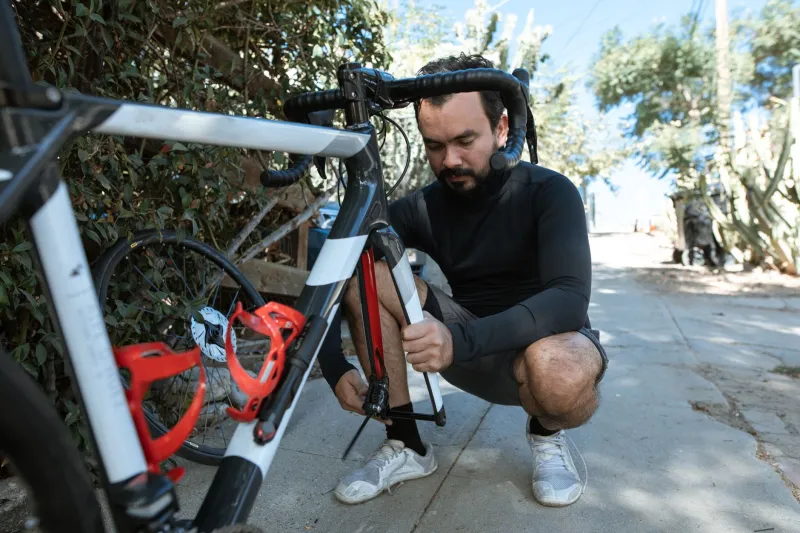
Most roadside tube swaps follow the same rhythm. Shift to the smallest cog at the back if you can, release the brake, and get the wheel out without wrestling the frame. Run a finger — or a gloved hand, carefully — around the inside of the tyre to find the thorn, glass or flint that caused the problem. If you skip this bit, the new tube may last approximately ninety seconds.
Fit one side of the tyre, pop the tube in with a little air in it, and work the second bead on with your thumbs before reaching for levers. Inflate gradually, check the tyre is seated evenly, and give the wheel a spin. Then pack up your own rubbish. A tube box left in the hedge is not part of the code.
In winter, when the light is going and the road is wet, the five-minute fix can feel like fifty. That is when the spare-tube pact earns its keep. A stranger with a working pump is not just a good Samaritan; they are the reason you get home before your hands go numb.
What the bike shops hear
Regulars at Tyneside bike shops will tell you the same stories. The commuter who has never changed a tube and has been meaning to learn. The weekend rider who carries three tubes but no pump. The person who bought the wrong size online and discovered it at the worst possible moment. Nobody is laughing at them — most mechanics have been there — but the advice is consistent: practise at home, on a dry day, with a cup of tea nearby.
There is also a quiet reciprocity in the local scene. The rider who gets helped on the Quayside one week is often the one who stops for someone else on the Waggonways the next. It is not a debt, exactly. More like a shared understanding that the roads and paths are better when people are willing to pause.
Being the kind of cyclist who gets helped back
Perhaps the most useful thing you can carry is not kit at all. It is the habit of being approachable. A hello on the shared path. A nod at the lights. A bit of patience when someone is pushing a bike up a hill. Those small gestures build the sort of local culture where stopping for a stranger feels normal rather than heroic.
So here is a simple roadside checklist for the spare-tube pact:
- Carry a tube that fits your tyres, plus levers and a working pump.
- Know your valve type and your tyre size.
- Ask before helping, and accept no for an answer.
- Let the person with the flat lead the repair.
- Check the tyre for the cause before fitting a new tube.
- Pack out everything you brought in.
- Offer a patch or a pump even if you cannot stay.
- Say thanks when someone stops for you — and pass it on.
On a cold morning on the Coast Road, or a bright afternoon out towards the Tyne Valley, the difference between a good ride and a grim one can come down to a few grams of rubber and a stranger who decides to stop. Tyneside already has the hills, the weather and the café stops. The spare-tube pact is the bit that keeps it all moving.