Empty Beaches, Fat Tyres, Warm Chips: Riding the Coast Out of Season
Ask most people about beach riding and they picture July: crowds, ice cream vans, a queue for the car park and a dog lead tangled in your spokes. Ask anyone who actually rides the coast and they'll tell you the good stuff starts around bonfire night.
In winter the beaches north of the Tyne empty out. The sand firms up, the light goes all pale and horizontal, and you can ride for a mile without seeing a soul. There are trade-offs — wind, salt, the small matter of tides — but nothing that a bit of prep and a decent jacket won't handle.
Why the quiet season wins
The biggest draw is the surface. Hard, damp sand at low water is one of the fastest, smoothest riding surfaces in the region, and it's only reliably available when the summer crowds have gone home. Access is easier too: car parks empty, promenades quiet, and the fish and chip shops serving locals rather than day-trippers.
There's a genuine North East feeling to it as well. Riding Longsands with the sun sitting behind Tynemouth Priory, or rolling north past St Mary's Lighthouse with a headwind doing its best to stop you, is a very particular pleasure. Bleak, yes. But the good kind of bleak.
Read the tide before anything else
This is not optional. The tide along this coast moves fast and comes round the back of you while you're busy admiring the view. Check a tide table the night before and again on the morning, and plan to ride on a falling tide, ideally finishing before low water. Getting caught on a rising tide with a soft exit and cliffs behind you is how people end up in the news.
A few other things worth planning around:
- Soft sand. Anything above the high-water mark, and anything near the dunes, is a slog. Stay low near the waterline where the sand is packed.
- Wind. Check the forecast and be honest with yourself. A 20mph southerly on the way out is a lovely tailwind home — or, if you get it wrong, a grinding hour of misery. Riding out into the wind first is the classic trick.
- The wrack line. That dark band of seaweed and debris hides glass and, occasionally, a rock. Cross it deliberately, not at speed.
- Structures. Groynes, outfall pipes and rock armour at the Tynemouth end all catch riders out. And King Edward's Bay is stairs, not a beach exit, so be ready to shoulder the bike.
- Fog and sea fret. It arrives quickly and visibility on an empty beach goes to nothing. Lights and a phone in a dry bag, every time.
Setting the bike up
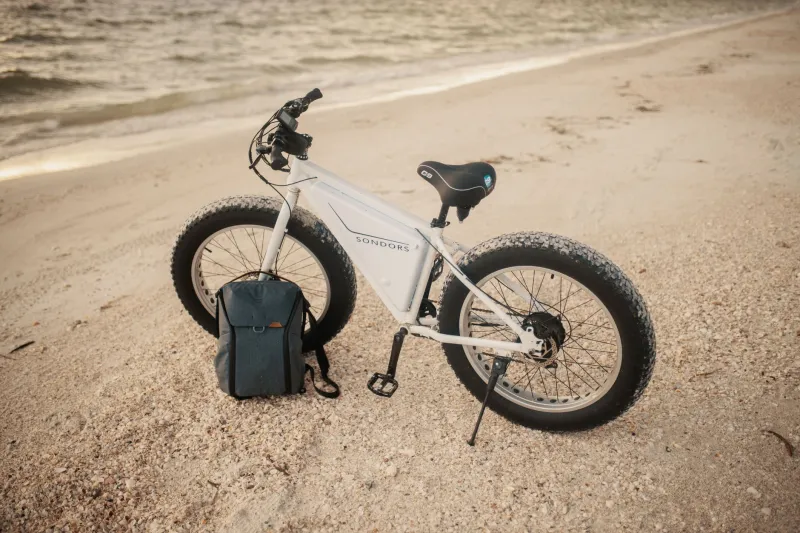
You don't need a fat bike, but it helps. A proper fat bike on 4-5in tyres will float over soft stuff at 5-8 psi and stay remarkably composed on firm sand. A plus-tyre bike on 2.8-3.0in rubber, run around 12-15 psi and set up tubeless, will handle most of what this coast throws at it for a fraction of the money. A standard gravel bike can work beautifully on hard sand — just don't ask it to cross the soft stuff with any dignity.
Whatever you ride, run slightly lower pressure than you would on the road, keep your mudguards on, and favour a low gear you can spin rather than a big one you'll grind.
The salt tax
Here's the part people forget. Sand and seawater destroy drivetrains faster than anything else in cycling. A few habits will save you a fortune:
- Rinse the bike with fresh water — a garden sprayer or a bottle is plenty. Never a pressure washer near bearings.
- Dry the chain properly and re-lube straight away, then again the next morning. Salt left overnight does its worst work in the dark.
- Check your disc brake pads and rotors, and give the calipers a wipe. Salt eats through cheap fasteners and alloy nipples, so a quick spray of a protective lubricant on exposed bolts pays for itself.
- Take the wheels out occasionally and check the hubs. Beach bikes get neglected in exactly the places that cost the most to fix.
The route
Start at Whitley Bay, by the Spanish City, and drop onto the sand at the northern end of the Links. Head south to Cullercoats, then climb out for the promenade run to Tynemouth Longsands — a good place to test the legs on firmer sand. Shorter, sociable and instantly rewarding.
For something longer, go north instead: Seaton Sluice, then Blyth, then Cambois, Newbiggin and the long sweep towards Druridge Bay. There are access points and car parks at most of these, so you can stitch together a ride that matches the tide and the weather rather than fighting them.
Chips, obviously
No coastal ride in the North East is complete without a chip-shop finish, and winter is when the queue is short. Pantrini's in Whitley Bay has been feeding riders for generations; Longsands Fish Kitchen does the Tynemouth end nicely; and if you cross to the south side on the Shields ferry, Colman's has been a South Shields institution for a century. Riley's at Tynemouth is a lovely thing when it's open — check winter hours before building a plan around it.
Then sit outside, salty and windswept, with a paper of chips going cold in the breeze, and wonder why anyone bothers riding in August.